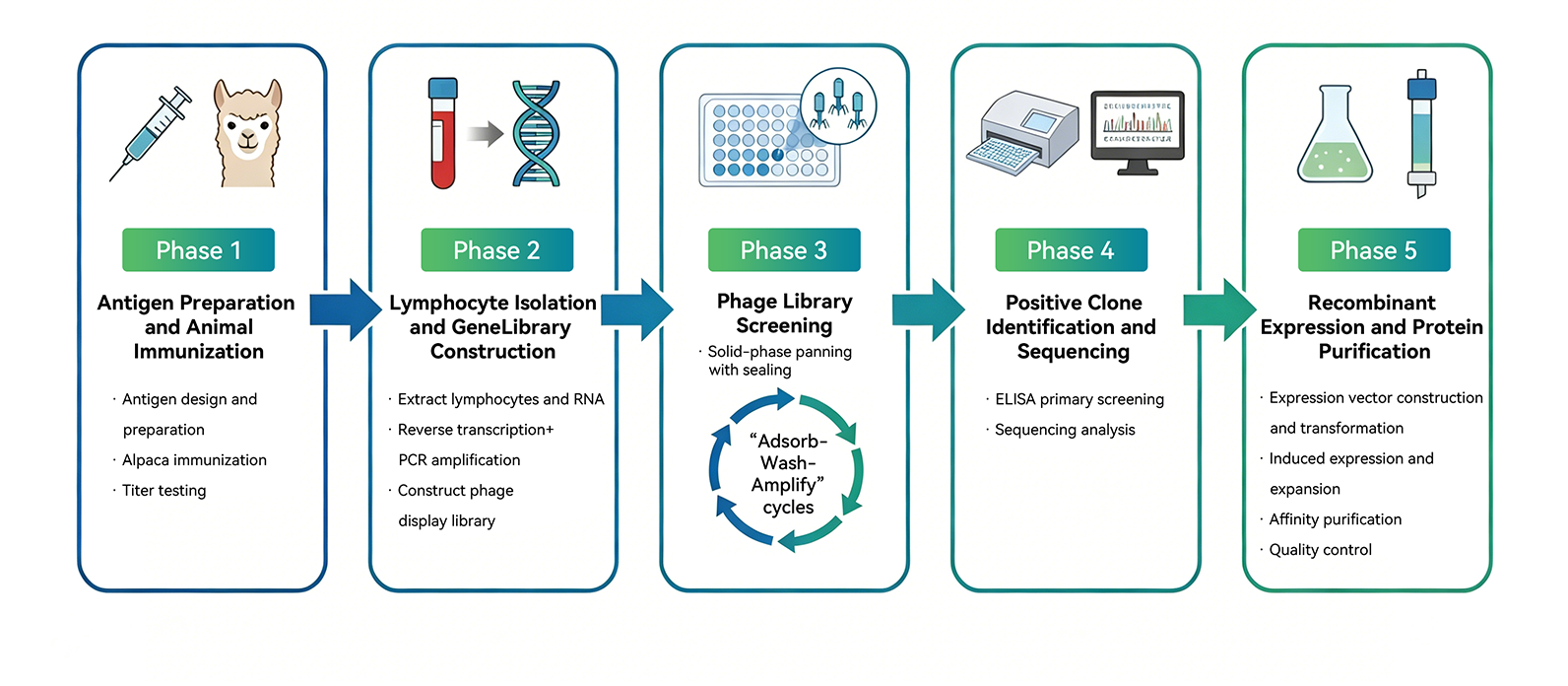
Our proprietary nanobody screening platform is built upon phage display technology, dedicated to high-efficiency isolation of high-affinity nanobodies tailored for cell therapy development. We have established a highly diverse naïve nanobody phage library, where single-domain antibody fragments are genetically fused to phage coat proteins for surface display. Via iterative rounds of antigen incubation, stringent washing, competitive elution and phage amplification against target tumor antigens, clones featuring exceptional specificity and binding affinity are rapidly enriched. Positive hits are further characterized by ELISA, SPR and multiple orthogonal assays to identify high-quality lead candidates.
Nanobodies exhibit unique superior properties ideal for cell therapy: low molecular weight (~15 kDa), robust biochemical stability, potent tumor tissue penetration and facile humanization. They serve versatile functional roles in CAR engineering: acting as antigen-recognition domains for CAR constructs, integrated into armored CAR-T architectures, or expressed as secreted modulators such as PD-1 neutralizers to remodel the immunosuppressive tumor microenvironment locally. This multimodal mechanism effectively prolongs T-cell persistence, boosts T cell cytotoxic potency and mitigates systemic toxic side effects.

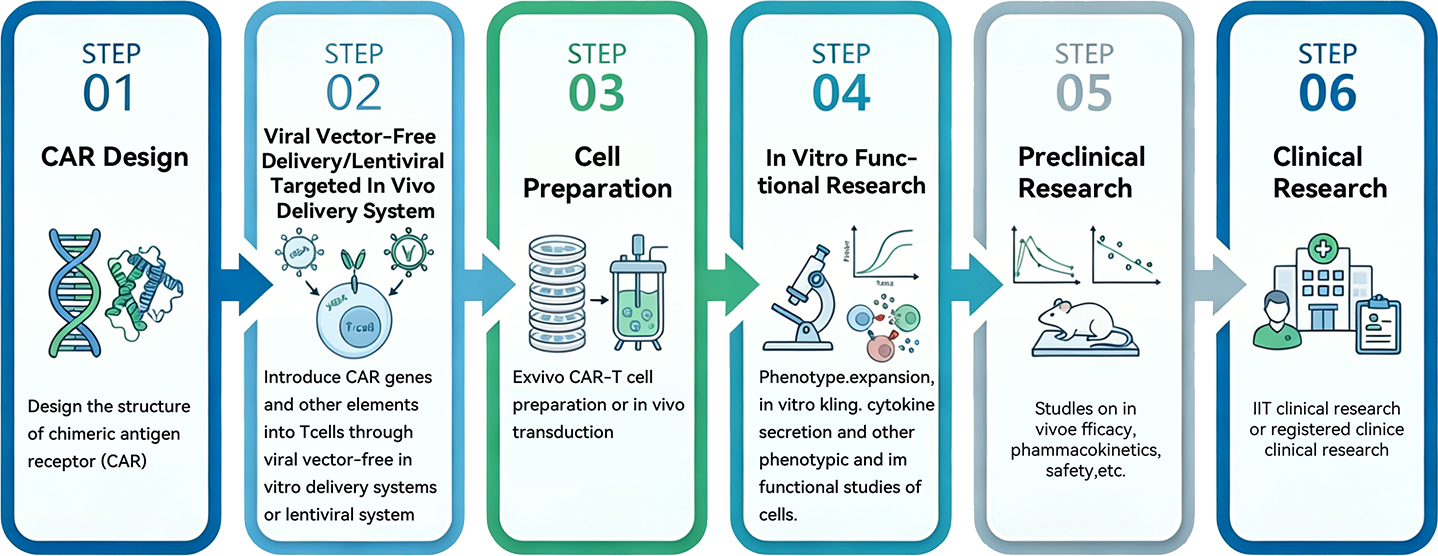
Our proprietary Immune Cell Drug Discovery Platform supports rational design of diversified CAR architectures. CAR transgenes are delivered into T or NK cells through non-viral delivery systems to generate CAR-T and CAR-NK cell products.
We conduct comprehensive in vitro functional profiling of engineered cells, covering proliferative activity, target-specific cytotoxicity, antigen specificity, long-term persistence, cytokine secretion profiles and serial killing capability. Candidates with potent anti-tumor activity validated in vitro advance to animal model studies for systematic evaluation of in vivo pharmacodynamic efficacy, pharmacokinetics, general safety and toxicological risk.
Spanning the full R&D pipeline from early target discovery through complete preclinical validation, the platform supports the development of cell therapies, bispecific antibodies and other novel immunotherapeutics for oncology and autoimmune disorders. It drastically shortens overall research timelines and elevates candidate developability, serving as a core technical engine for the efficient creation of novel immune therapeutics.
Our proprietary Plasmid Vector Process Development Platform serves as a core upstream workhorse supporting CRISPR gene editing and cell therapy product development, with a focus on high-yield expression plasmid construction and precise sgRNA design.
The platform adopts modular vector backbones integrated with high-copy replicons, potent promoters (e.g., EF1α), codon-optimized sequences and stabilizing elements. It enables rapid construction of high-titer, low-endotoxin expression plasmids to meet large-scale manufacturing demands for Cas9, donor templates and multifunctional effector factors.
For sgRNA design, we deploy advanced bioinformatic algorithms that comprehensively weigh on-target editing efficiency, off-target risks and multi-target compatibility to automatically generate libraries of optimal sgRNA sequences. The platform also supports the design of tandem gRNA expression cassettes, enabling simultaneous multi-gene knockout from a single plasmid. High-throughput screening and validation workflows drastically boost genome editing efficiency and specificity.
Deeply synergized with electroporation and site-specific knock-in technologies, this platform supplies high-quality plasmid raw materials for complex products such as universal armored CAR-T. It substantially shortens process development timelines and cuts manufacturing costs, while guaranteeing the safety and batch consistency of downstream cell therapy products. The platform acts as a critical industrial infrastructure to underpin the industrialization of next-generation cell therapeutics.
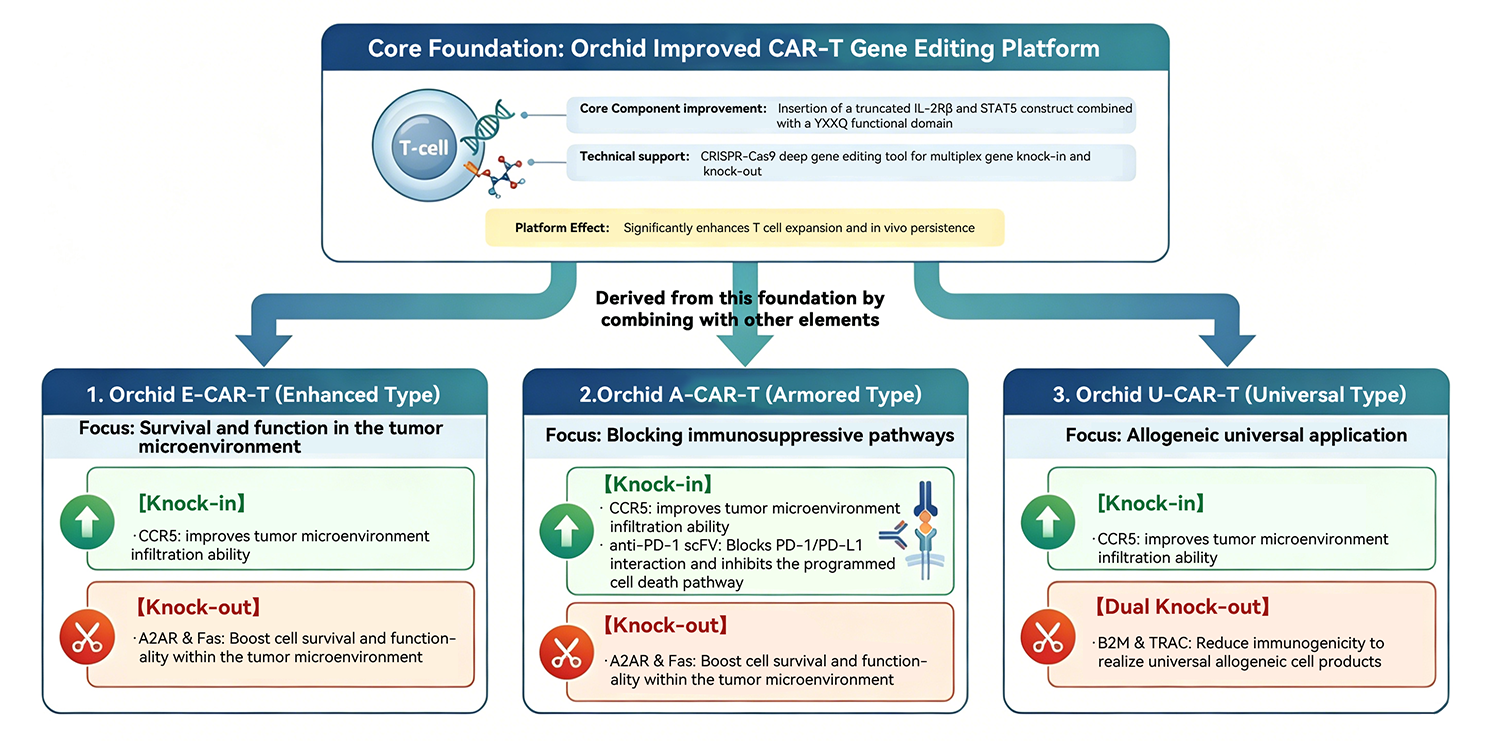
Our multi‑target simultaneous knockout and site‑specific CAR knock‑in technology, based on CRISPR‑Cas9, is an advanced genome editing platform designed for next‑generation cell therapies.
By co‑delivering multiple gRNAs and Cas9 nuclease, we achieve precise simultaneous knockout of multiple target genes , effectively eliminating T‑cell immunogenicity, graft‑versus‑host disease risk, and tumor microenvironment suppression, thereby generating true universal and enhanced CAR‑T products. Additionally, the platform employs homology‑directed repair (HDR) or non‑homologous end joining (NHEJ)‑mediated site‑specific integration to insert the CAR gene precisely into a safe‑harbor locus , achieving single‑copy, position‑controlled expression, thereby avoiding insertional mutagenesis and expression variability associated with random integration.
This "one‑step" editing approach substantially improves product safety and consistency, shortens manufacturing time, and lowers costs. This technology provides a revolutionary tool for solid tumor cell therapy, enabling rapid multifunctional optimization of products like armored CAR‑T and facilitating the transition from personalized to universal cell therapies.
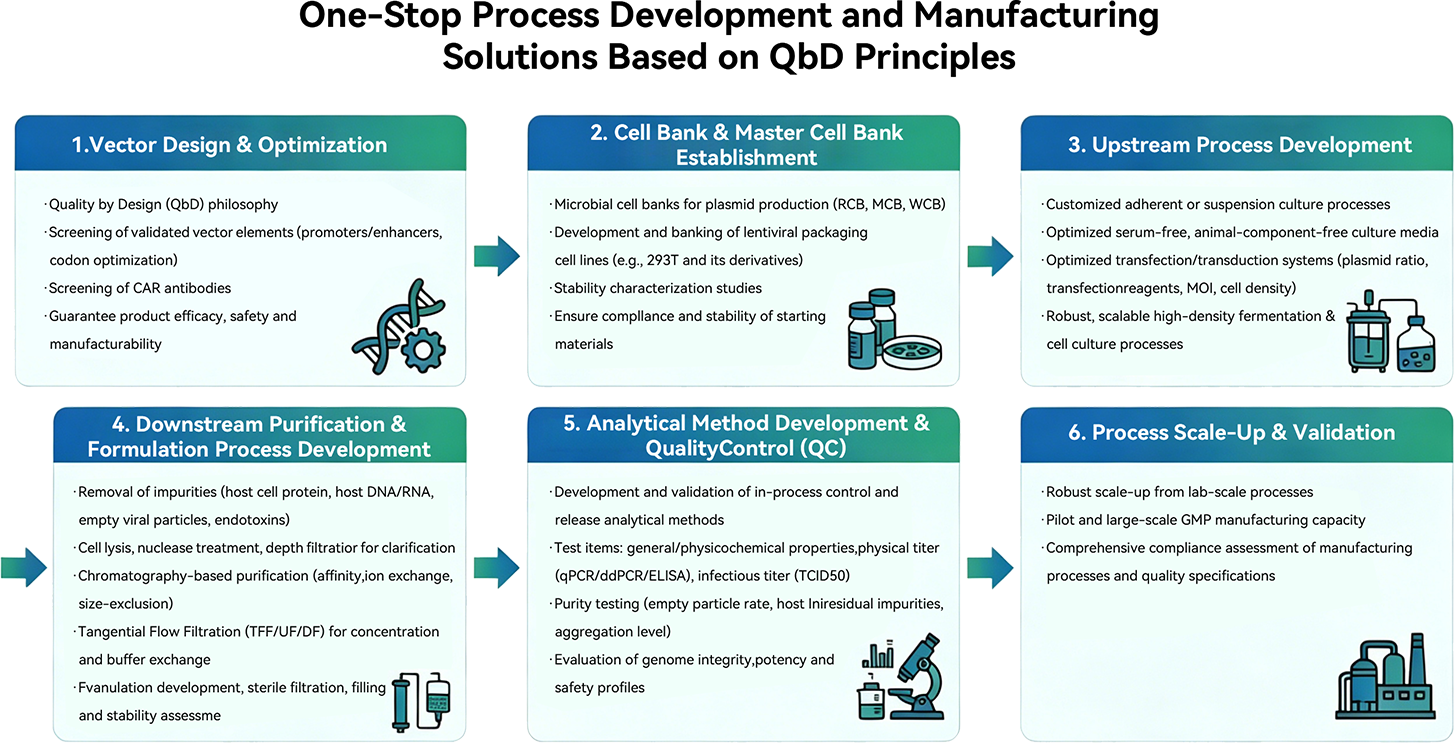
Our proprietary Cell Manufacturing Process Development Platform is an integrated R&D system covering cell line construction, cell culture, purification, analytical quality testing and scalable process scale-up.
The platform delivers rigorous control over critical quality attributes, including basal cell culture performance, viral transduction efficiency and cell expansion folds. It features stable, fully QC-compliant cell manufacturing workflows and has overcome key technical bottlenecks in T/NK cell isolation, activation and large-volume expansion. Supporting rapid process development spanning early-stage screening through commercial-scale production, the platform balances high, consistent product yields with full GMP compliance.
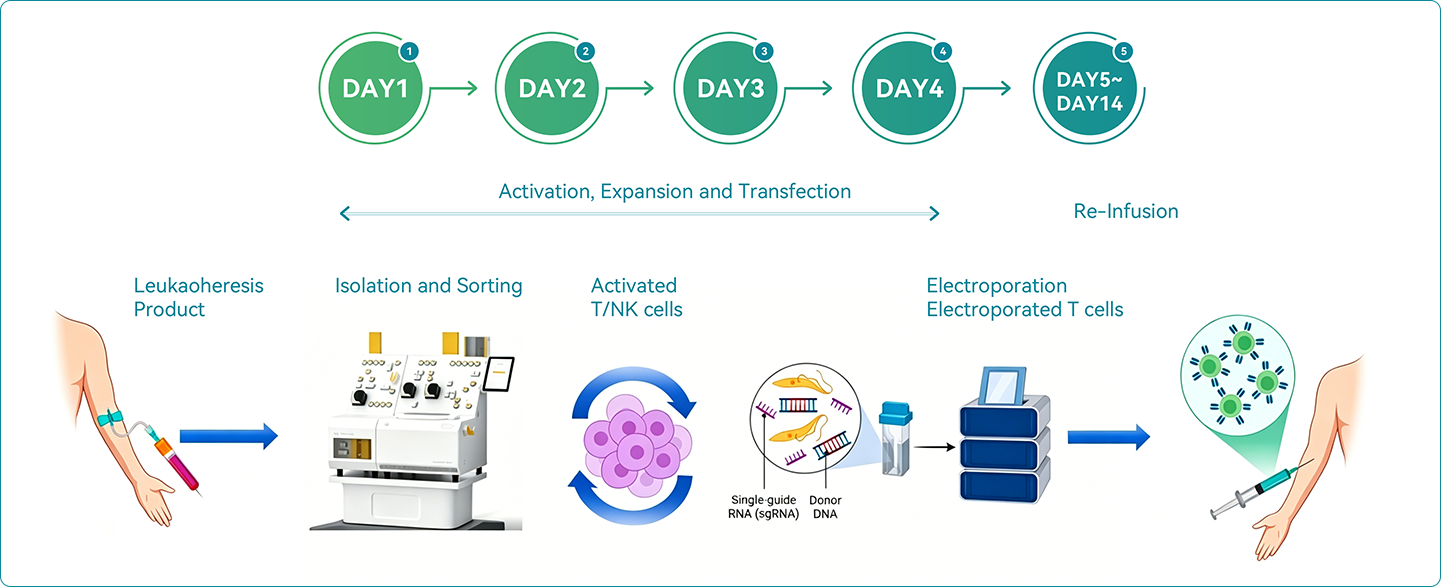
Our proprietary electroporation platform is a non-viral delivery system developed to meet demanding complex genome editing requirements, specially engineered for simultaneous multi-gene knockout and site-specific CAR knock-in.
When simultaneous editing of multiple genes and CAR insertion are required, lentiviral and adenoviral vectors are limited by packaging capacity and cannot efficiently carry multiple gRNAs, Cas9 expression cassettes and donor templates. Meanwhile, combined delivery of various RNPs involves cumbersome workflows and inconsistent editing efficiency.
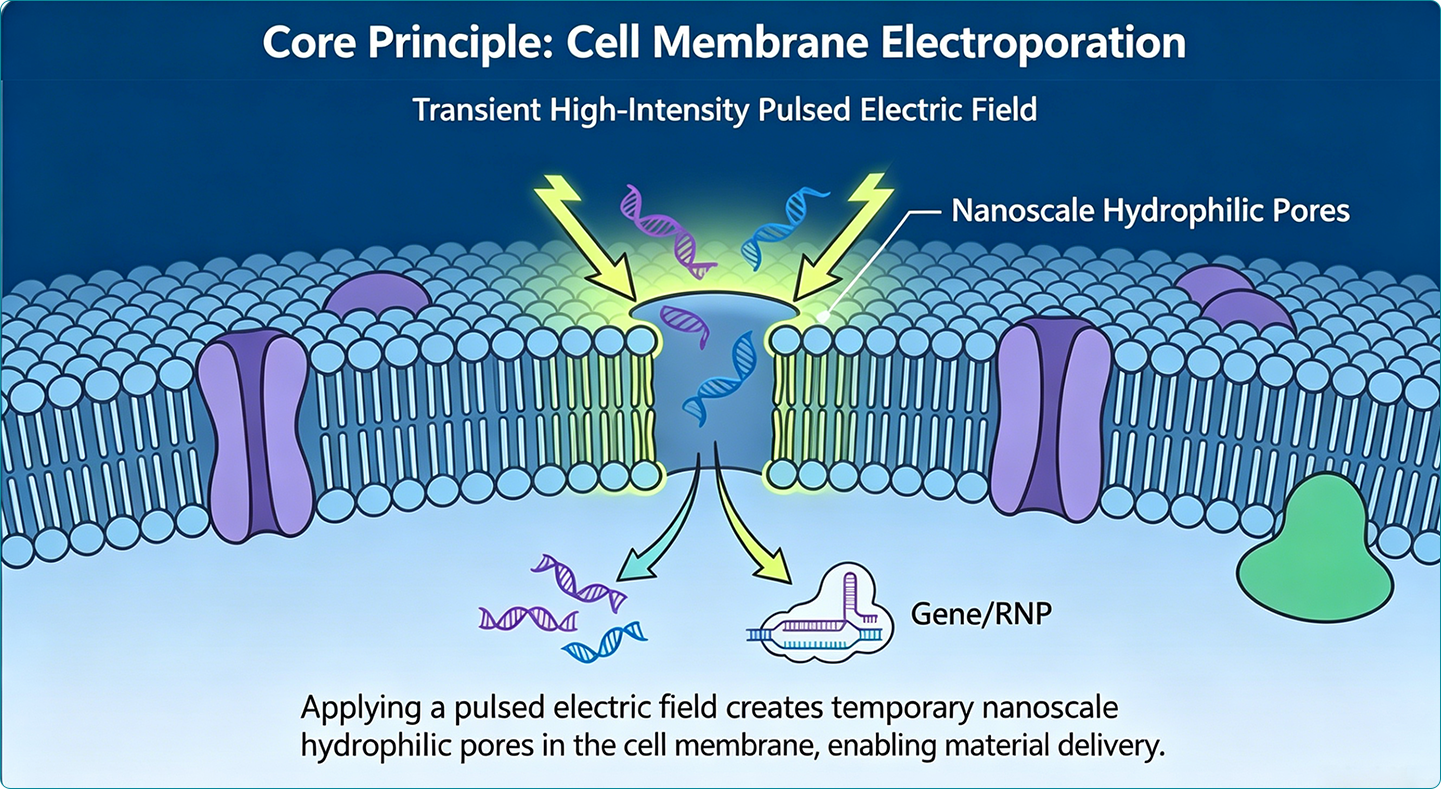
This platform adopts electroporation technology to deliver pre-assembled CRISPR-Cas9 RNPs, multiple gRNA fragments and linearized donor DNA into T cells in a single, high-efficiency step. By fine-tuning electroporation parameters and delivery formulations, we achieve synchronous multi-locus knockout and precise site-specific CAR integration . Complex genetic modifications are accomplished in one run, greatly improving editing efficiency and batch uniformity. Furthermore, the platform eliminates integration risks and immunogenicity concerns inherent to viral vectors.
It delivers an ideal manufacturing solution for next-generation candidates such as universal armored CAR-T. The technology drastically shortens production lead times and cuts overall costs while safeguarding product safety and intact therapeutic functionality, laying a solid foundation for large-scale commercial manufacturing of cell therapies targeting solid tumors.
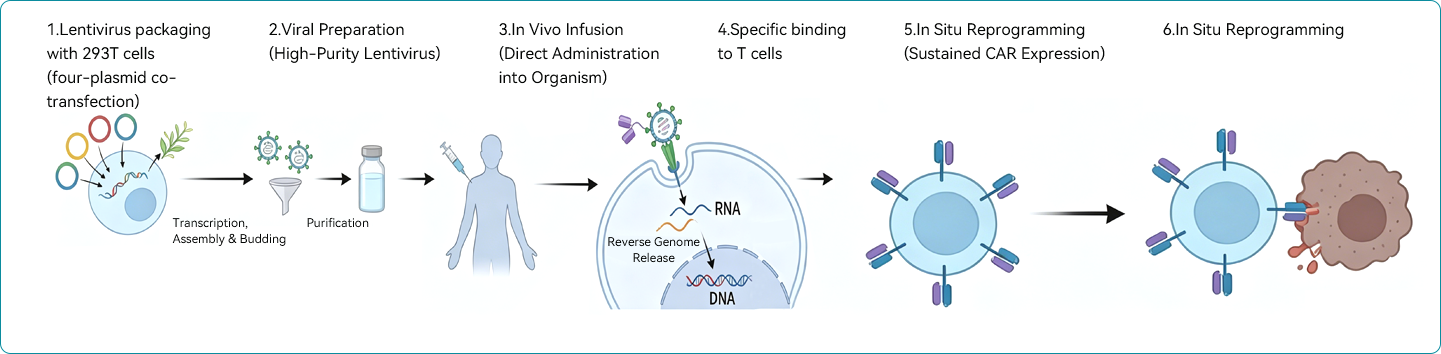
Our proprietary In Vivo Targeted Lentiviral Gene Delivery Platform represents an advanced technology that enables precise in situ genetic modification directly inside patients without ex vivo cell isolation and manipulation. Built on engineered lentiviral vectors, the platform confers potent T-cell tropism and in vivo immune evasion capacity via envelope protein engineering, including VSV-G mutagenesis, fusion of targeting peptides or antibodies, and vector pseudotyping.
Three core functional components are integrated into the system: a high-capacity lentiviral backbone capable of accommodating CAR transgenes, cell-specific targeting modules, and serum-stabilizing protective coatings. Following intravenous administration, the vector withstands clearance by neutralizing antibodies and complement factors during systemic circulation. It specifically recognizes and binds surface receptors on target cells via targeting ligands, triggering efficient endocytosis, endosomal escape and stable genomic integration. This drives long-lasting, safe transgene expression in situ, which can either generate CAR-T cells directly within the body or correct defective genes in diseased tissues.
The technology drastically simplifies manufacturing workflows and reduces production costs, while eliminating T-cell exhaustion induced by ex vivo expansion. It delivers off-the-shelf, highly targeted in vivo gene therapy solutions for tumor immunotherapy, genetic disorders and metabolic diseases.





Copyright © 2026 Orchid Therapeutics Co., Ltd. all rights reserved